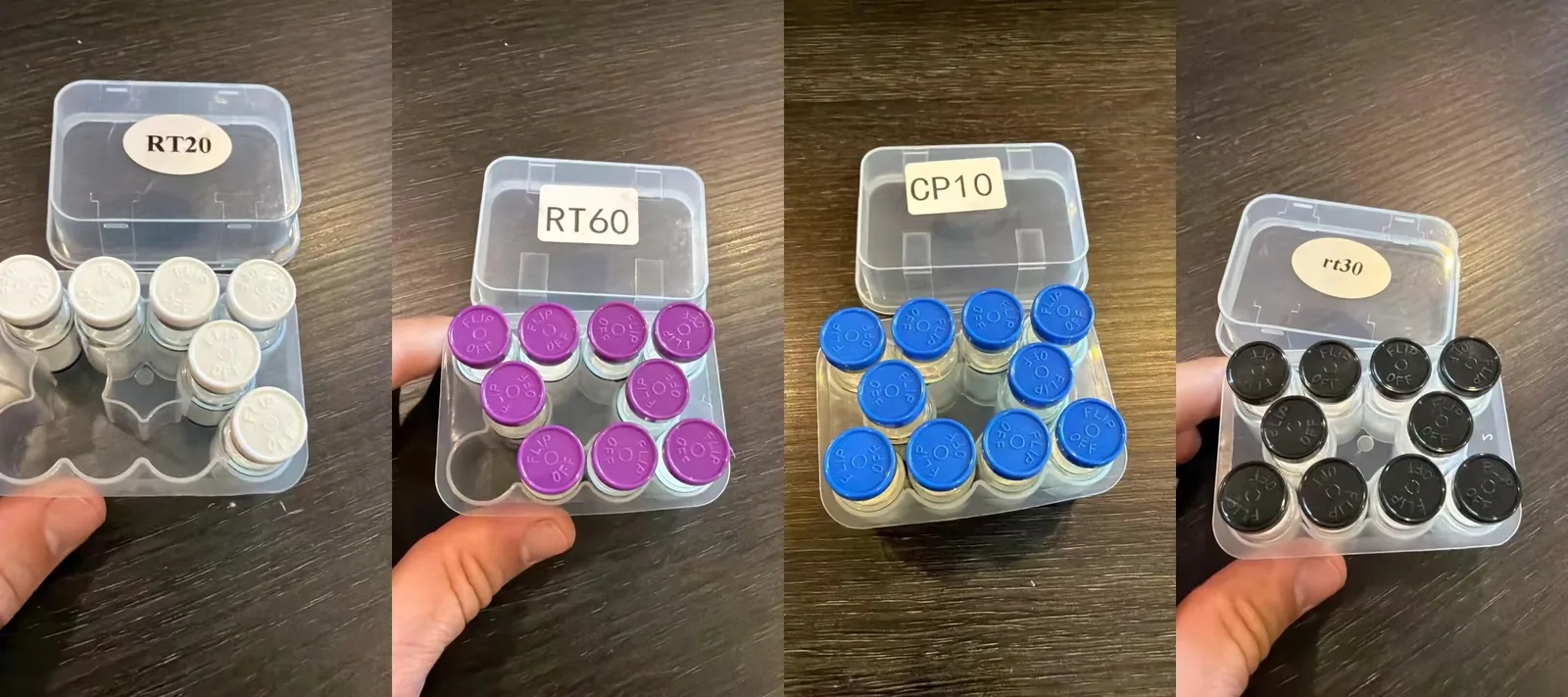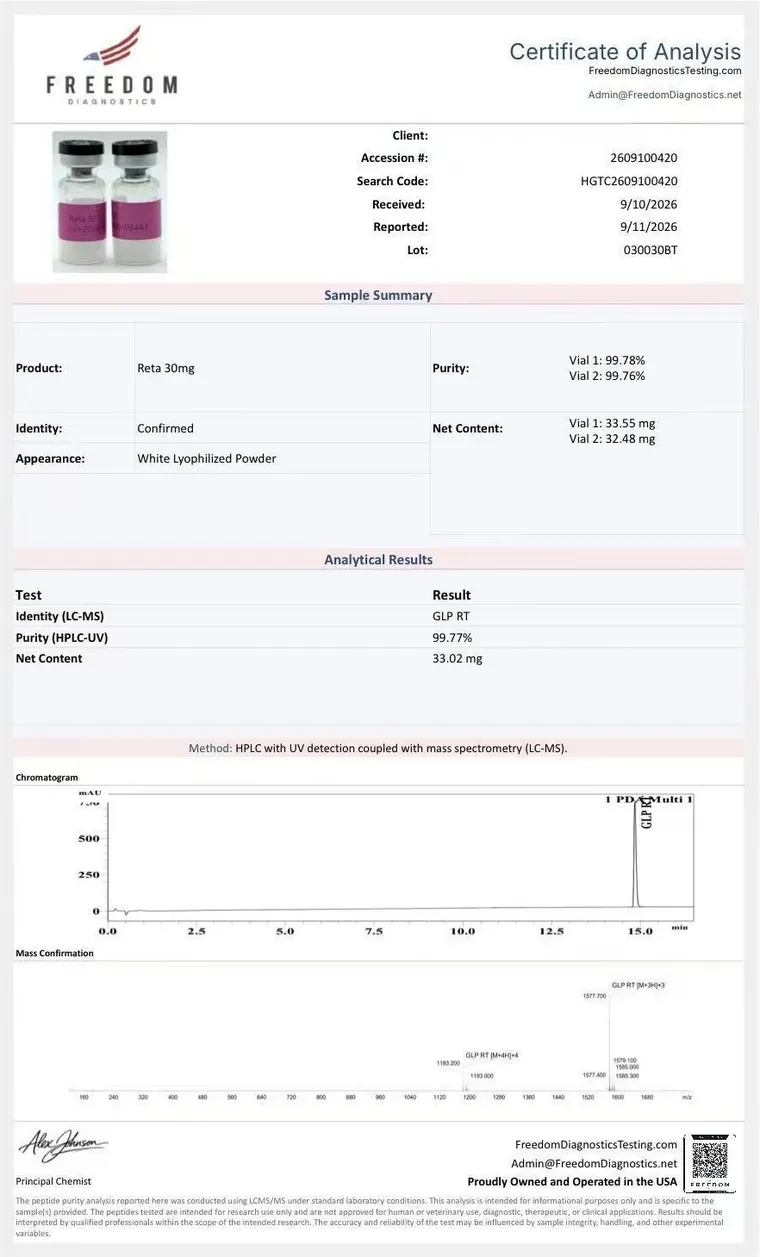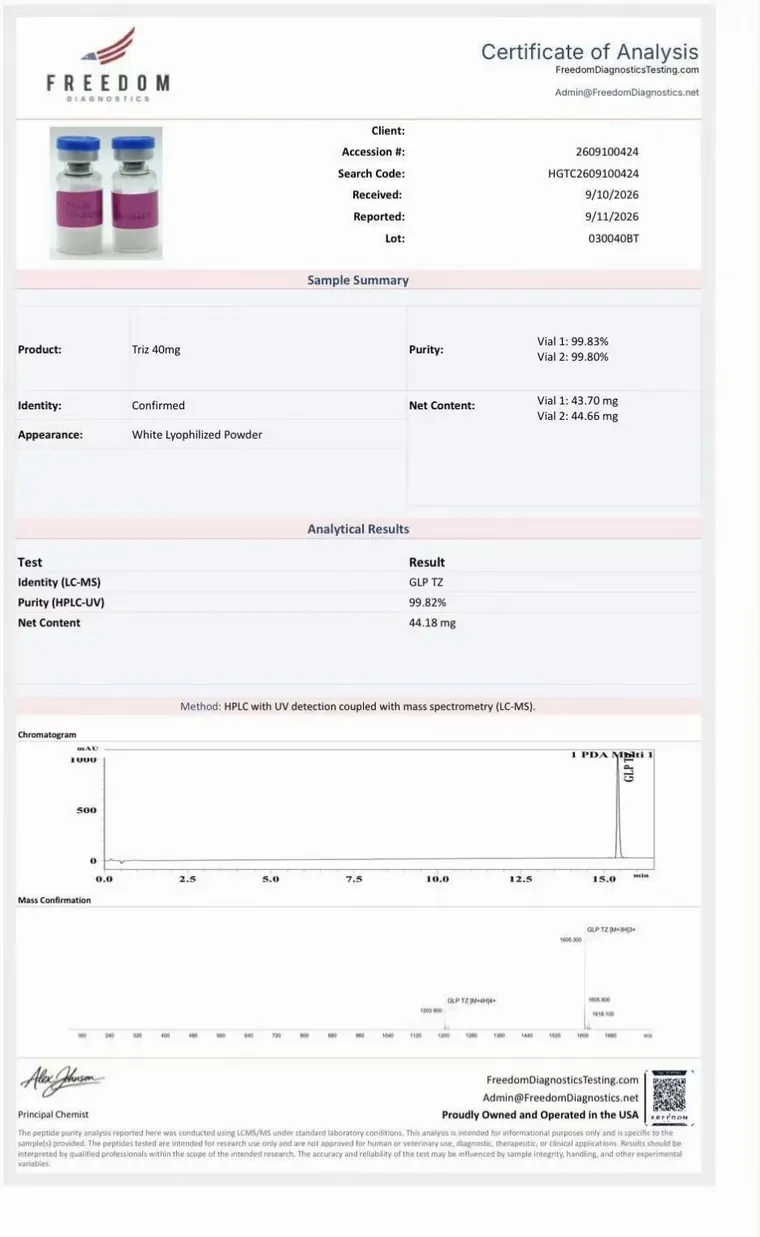
A sealed vial of white powder crossing three climates in a courier's hold sounds fragile. In practice it is one of the most stable ways to ship a peptide — as long as the powder stays a powder.
What freeze-drying does
Lyophilisation removes water by freezing the solution and then sublimating the ice under vacuum. What remains is a porous cake with residual moisture typically below 3%. With water gone, the two reactions that destroy peptides fastest — hydrolysis and deamidation — slow to a crawl.
The cake also locks the molecule in a glassy solid state. Mobility is near zero, so aggregation and conformational change are strongly suppressed. This is why a lyophilised peptide can tolerate weeks at room temperature while the same peptide in solution would degrade in days.
Temperature: what actually matters
| Condition | Effect on a lyophilised peptide |
|---|---|
| −20 °C, sealed, dry | Long-term storage; the default for a working stock |
| 2–8 °C | Comfortable for months; no freeze–thaw cycling |
| 15–30 °C, sealed, desiccated | Fine for the duration of a shipment — days to weeks |
| Above 40 °C for extended periods | Accelerated degradation; avoid leaving parcels in a hot vehicle |
Two things damage a vial more than a warm week: moisture and repeated temperature cycling. A desiccant sachet inside a sealed bag handles the first. Letting the vial warm to room temperature before opening handles the second, because condensation forms on cold glass.
Light and oxygen
Aromatic residues — tryptophan, tyrosine, phenylalanine — absorb UV and can be oxidised. Amber vials and secondary cartons are not decorative. If you decant powder, do it in dim light and reseal quickly.
Once it is in solution
A reconstituted peptide is a different stability problem: water is back, and with it hydrolysis, aggregation and microbial growth. In laboratory practice that means keeping solutions cold, limiting freeze–thaw cycles, and treating them as short-lived working stocks rather than long-term storage. The lyophilised form exists precisely so that transit and storage do not depend on any of that.
Signs a vial has been compromised
- The cake has collapsed into a sticky or shrunken mass — usually a moisture event.
- Colour has shifted from white or off-white to yellow or brown.
- The powder will not dissolve, or the solution stays cloudy with visible particles — a strong indicator of aggregation.
- The stopper is loose or the crimp is deformed — the seal has failed and the contents are no longer what the certificate describes.
Any of those is a reason to reject the vial, not to use more of it.
Why we ship the way we do
Lyophilised peptides leave our facility in an insulated box with a desiccant sachet and a sealed inner bag. Liquids — a minority of our range — travel with gel packs instead, because a solution has none of the powder's tolerance. Every kit carries the lot number that ties it to its certificate, so a stability question can be traced back to a specific fill date rather than answered with a shrug.
All compounds referenced in this article are supplied for laboratory research use only. Nothing here is medical advice, dosing guidance or a claim of therapeutic benefit.
← Back to Resources