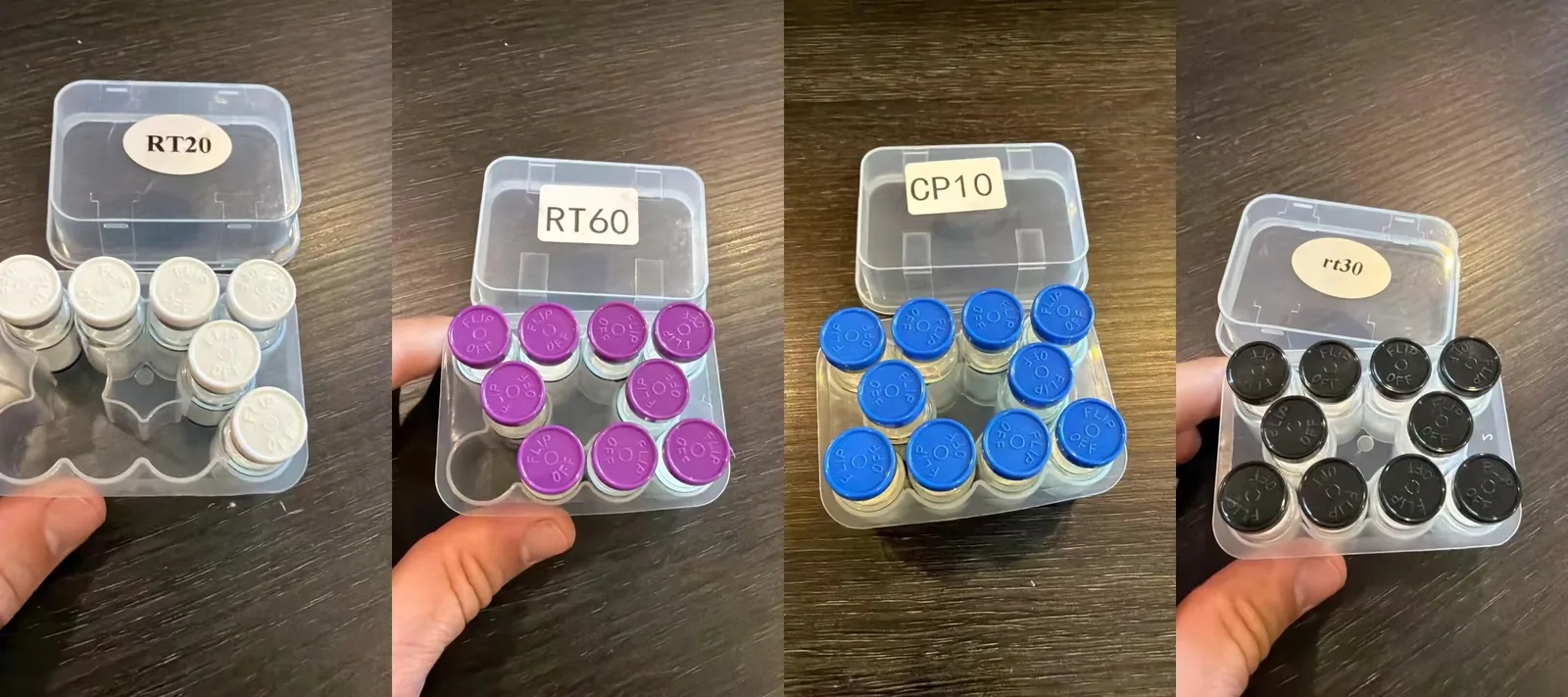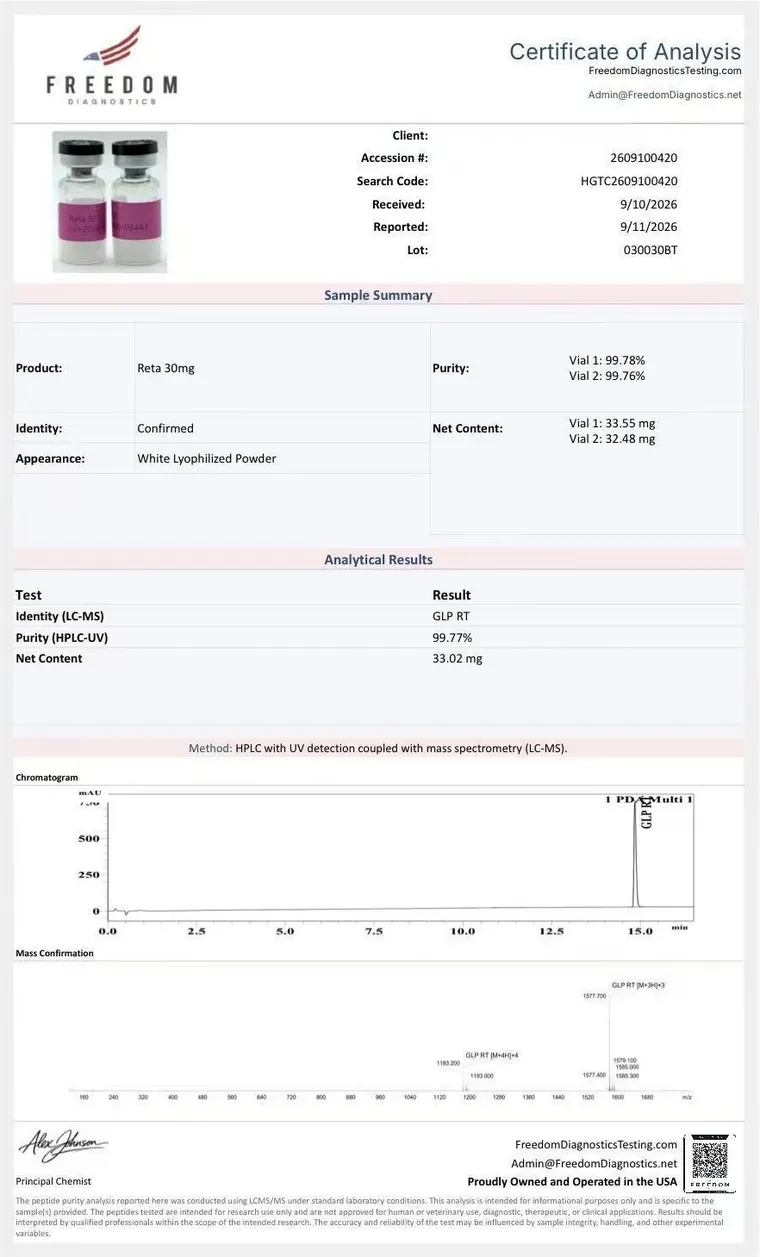
Two suppliers quote a “10 mg” vial. One is 30% cheaper. On the certificate, the cheaper vial contains 7 mg. The expensive one is now the cheap one.
The only number that compares
Price per vial tells you nothing. Price per milligram of measured peptide tells you everything:
| Quote | Label | Measured | Price | Cost per mg |
|---|---|---|---|---|
| Supplier A | 10 mg | 11.06 mg | USD 42 | USD 3.80 |
| Supplier B | 10 mg | 7.10 mg | USD 29 | USD 4.08 |
The “cheaper” vial is 7% more expensive per milligram, before you count the second courier charge for a replacement.
Why overfill exists
Filling a vial with exactly 10.00 mg of lyophilised powder is not achievable at production speed: the powder is static, fluffy and loses a little to the vial wall. Reputable manufacturers target a small overage — commonly 5 to 10% — and state it on the specification. Underfill, by contrast, is a decision, not an accident.
Three questions that turn a quote into a number
- What is the measured net content, and on which lot? Not the label: the assay.
- What purity, by what method? A 99% label built on 95% material is a different cost base.
- What is included? Kit of ten or single vial, cold packing, documentation, and who pays if customs holds the parcel.
Where cheap actually comes from
- Underfill — the most common trick, and the easiest to detect with a certificate.
- Lower purity — 95% material costs meaningfully less than 99.5%, and both can be sold as “research grade”.
- No independent testing — you save the lab fee and inherit the risk.
- Different salt form — acetate versus TFA changes the mass of peptide per milligram of powder.
None of these is visible in a price list. All of them are visible in a certificate.
The practical rule
Ask for the certificate before the invoice, divide the price by the measured milligrams, and compare that number. If a supplier will not give you the measured fill, they have answered the question anyway.
All compounds referenced in this article are supplied for laboratory research use only. Nothing here is medical advice, dosing guidance or a claim of therapeutic benefit.
← Back to Resources