Customs is where most first orders die — not because the product is a problem, but because the paperwork does not match the parcel.
The three documents that matter
| Document | What it does | What goes wrong |
|---|---|---|
| Commercial invoice | Declares seller, buyer, description, quantity and value | Description too vague (“samples”) or value inconsistent with the rest |
| Packing list | Tells the inspector what is physically in the box | Carton count or weights do not match the invoice |
| Customs declaration | Classifies the goods and states the duty basis | Wrong HS code, forcing a reclassification and a delay |
When these three agree, clearance is usually routine. When they disagree, the parcel sits — and storage charges start accruing whether or not anyone is working on it.
What an HS code is for
The Harmonised System code is a six-to-ten digit classification that tells customs what kind of goods are inside and therefore what duty and restrictions apply. Peptides generally fall under chapter 29 (organic chemicals, peptide-type compounds), but the correct subheading depends on the specific product and the destination's national tariff line. Getting it wrong is not a moral failure; it is a delay.
Why we prepare the documents ourselves
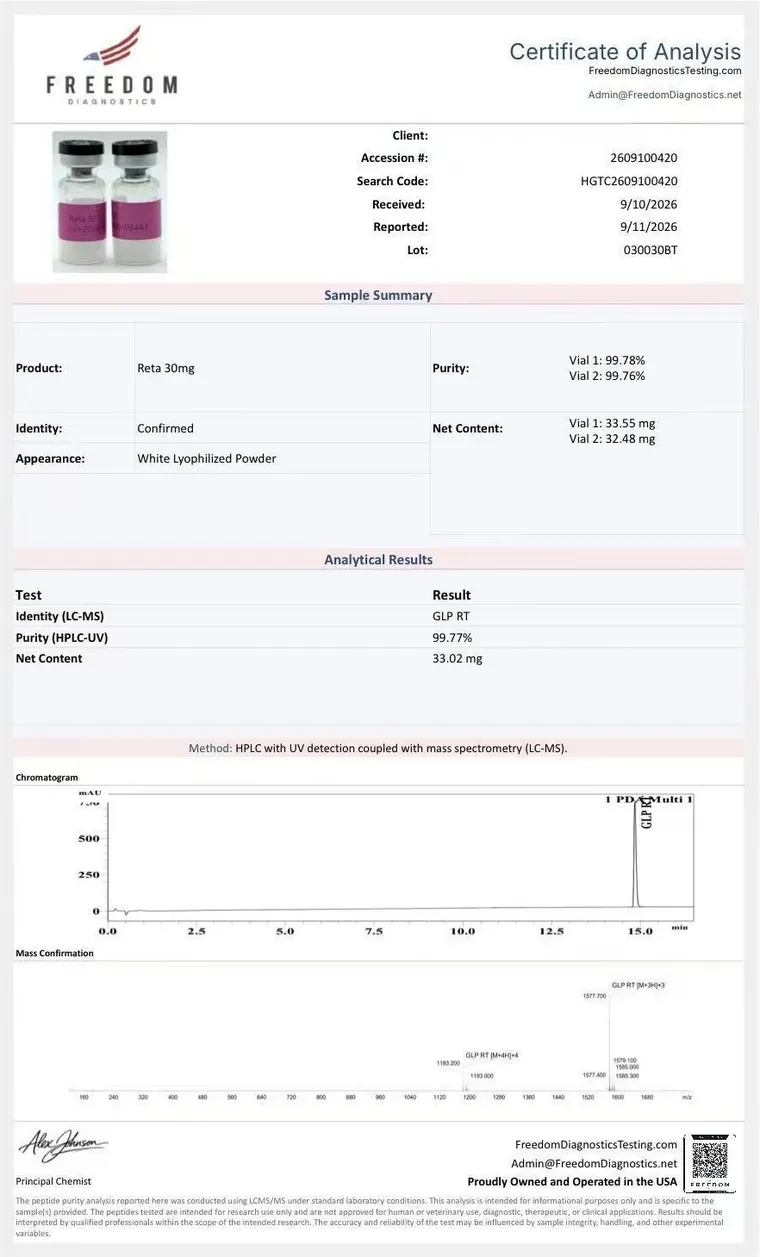
Most first-time importers discover they need a broker only after the parcel is already held. We issue the invoice, packing list and declaration in-house for every shipment, so the description on the paperwork matches the vials in the box and the certificate in the envelope. It is not a favour — it is the difference between a four-day transit and a three-week one.
Declared value: the part people get wrong
Under-declaring to reduce duty is the single most common cause of seizure, and the loss falls on the buyer: the parcel is held, the goods may be destroyed, and no insurer will pay. Declare what was paid. If duty is the constraint, choose a smaller order or a different route, not a different number.
If a parcel is held
- Ask the courier for the exact reason in writing — a code, not a sentence.
- Send the certificate and specification sheet; most holds are documentation queries, not product objections.
- If the destination requires an import licence for the category, no amount of paperwork substitutes for it.
- Agree the outcome before paying storage: release, return or destroy.
What we will and will not do
We prepare accurate documents, supply certificates on request, and replace a parcel once if it is refused at the border on a standard route. We do not mis-declare value, mis-describe contents, or ship to a destination whose import rules prohibit the product. Those are the two halves of the same principle: the paperwork has to be true, or none of it is worth anything.
All compounds referenced in this article are supplied for laboratory research use only. Nothing here is medical advice, dosing guidance or a claim of therapeutic benefit.
← Back to Resources